
Discover our sustainable suitcases


Sustainability at TITAN: materials, production and longevity
What is sustainable about a suitcase can only be pinned down at individual, concrete points: the material, the place of manufacture, the service life. On this page we describe which decisions we have taken at TITAN – and what each of them refers to.
The shells of our suitcases are made of pure polycarbonate, the lining of recycled polyester. Since 2020 production has taken place exclusively at our own site in Hauzenberg. The following statements each refer to the named component or process, not to the suitcase as a whole.
Made in Germany: production in Hauzenberg
We make every TITAN suitcase with the aim of achieving high stability, comfort in use and longevity. That is why we decided in 2020 to produce only in Germany. Since then our luggage has been made at our own plant in Hauzenberg in the Bavarian Forest.
Proximity to production allows continuous control over material and workmanship. It is also the precondition for the points we describe individually below: the choice of materials, the handling of offcuts and the cooperation with suppliers at short distance.
Materials and production at a glance
The following overview lists what the individual components are made of and where they come from. Every statement refers exclusively to the named part.
| Component / area | Material and origin |
|---|---|
| Suitcase shell | 100 % polycarbonate, virgin material; supplier Senoplast, Zell am See (Austria) |
| Lining | 100 % recycled polyester (rPET) |
| LITRON Frame frame | manufactured around 10 km from the Hauzenberg plant |
| Assembly | many components screwed rather than glued |
| Packaging | corrugated paper with 30 % grass content; Cartoflex, Lüneburg |
| Production | Hauzenberg, Germany, since 2020 |
| Emissions accounting | cooperation with ClimatePartner |
The suitcase shell is made of virgin polycarbonate, not of recycled polycarbonate. The statement about recycled material refers to the lining.
What makes a suitcase sustainable?
The following criteria are generally applied when luggage is assessed from an environmental perspective. They describe the state of the discussion, not the properties of a particular product.
-
Materials
- Recycled plastics such as rPET for linings or recycled polycarbonate for hard shells.
- Alternatives such as bioplastics, hemp fibres or recycled aluminium.
- PVC-free materials, as PVC can contain harmful plasticisers.
-
Longevity and repairability
- Robust materials that allow a long service life.
- Screwed rather than glued components, so that wheels, handles and zips can be exchanged.
- A spare parts service through which wear parts can be obtained.
-
Production and transport routes
- Regional manufacture with short distances between suppliers and plant.
- Energy-efficient production processes, for example through the use of renewable energy.
- Certifications such as the Global Recycle Standard (GRS) as independent proof of the recycled content of a material.
-
Recyclability
- A suitcase should be materially recoverable at the end of its service life.
- Take-back systems through which manufacturers return old products to the cycle.
-
Packaging
- Reduced plastic content, for example through cartons made of recycled material or grass paper.
-
Social responsibility
- Fair working conditions in production and at suppliers.
- Avoiding materials from problematic supply chains.
What to look for when buying a sustainable suitcase
The following points help with comparison – regardless of which brand you finally choose.
- Choice of material Ask which component is made of recycled material. Often the statement concerns only the lining, not the shell.
- Longevity and repairability Screwed components can be exchanged, glued ones generally cannot. Also check whether and how the manufacturer handles repairs.
- Production and transport routes A known place of manufacture makes the supply chain traceable and shortens the distances between suppliers and plant.
- Comfort and functionality Wheels, handles and interior layout determine how long a suitcase is actually used.
- Certifications Labels such as the Global Recycle Standard (GRS) are based on independent auditing. Ask to see the certificate and its scope, as it usually applies to a single material only.
Our focus areas in detail
The following four points describe what we are concretely working on. Each refers to a particular component or process.
Durable quality
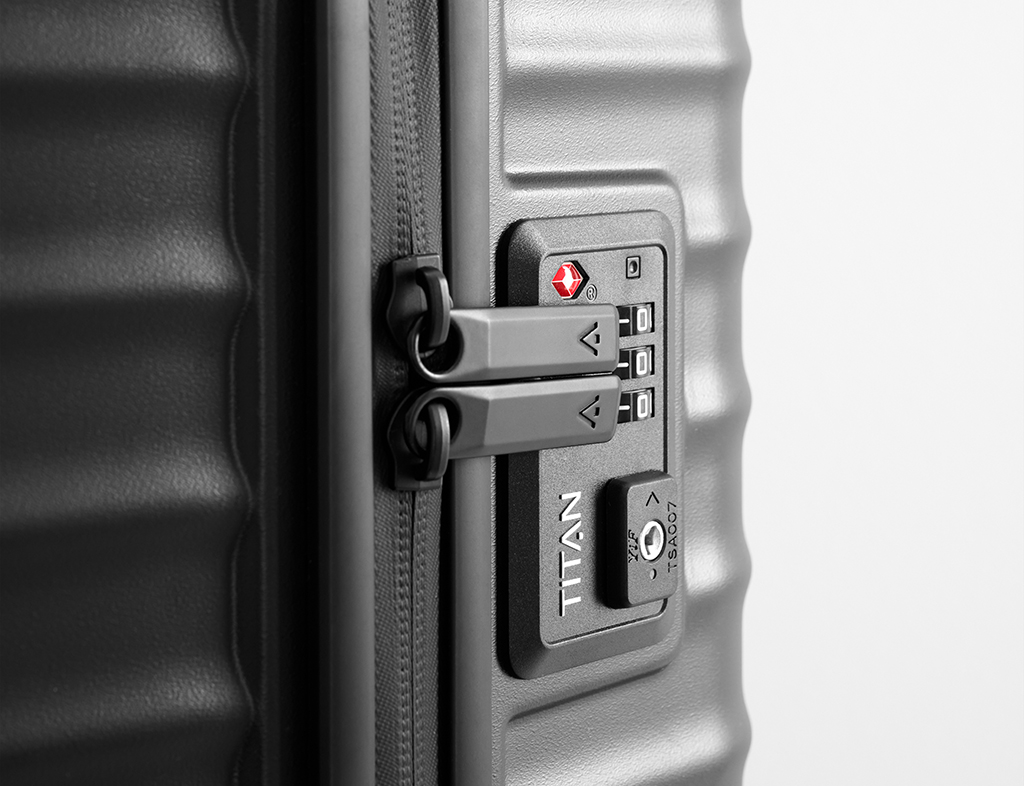
For the production of our suitcases we choose materials that meet our quality standards: the shells are made of 100 % pure polycarbonate, a plastic that absorbs impacts elastically while staying dimensionally stable.
Many components – including wheels, handles and locks – are screwed rather than glued and can therefore be exchanged individually.
Recycled materials
The interior of our suitcases is lined with a lining made of 100 % recycled polyester (rPET). The fabric is tear-resistant and covers the lid and base completely.
This statement refers exclusively to the lining. The suitcase shell is made of virgin polycarbonate.
Less waste in production
For our production in Hauzenberg we have developed processes that reduce waste. The offcuts produced when our suitcase shells are made are returned to the material cycle.
For our cartons we use corrugated paper with 30 % grass content. For this we work with Cartoflex, a packaging company from Lüneburg.
Regional manufacture
Transparency and continuous quality management across the entire value chain are achieved above all through regional manufacture and long-standing partnerships. Since the start of our German production we have used exclusively polycarbonate from our partner Senoplast in Zell am See, Austria.
The frames for our LITRON Frame are made around 10 kilometres from our plant in Hauzenberg. Short distances between suppliers and plant keep the transport effort low. For accounting our greenhouse gas emissions we work together with ClimatePartner.
Responsible cooperation
Our production in Germany is only possible through strong partnerships. We deliberately select the local suppliers and partners we work closely with. What unites us is the shared aim of developing durable luggage through high quality.
Warranty and repair
On products manufactured in Germany we grant a 10-year warranty from the date of purchase. The Mervus, Prior and X-Ray series are excluded. For older products, please refer to the enclosed product tag or the overview below for the warranty period.
| Series | Warranty |
|---|---|
| ETERNITY | 10 years |
| LITRON / LITRON Frame | 10 years |
| OVERSEAS | 10 years |
| UPGRADE | 10 years |
| Mervus | 5 years |
| Prior | 5 years |
| X-Ray | 5 years |
| Barbara Glint, Highlight, Looping, Nonstop, Paradoxx, Prime, Shooting Star, Spotlight, X2, Xenon | 3 years |
The warranty covers material defects and defects caused by poor workmanship only and is limited to the value of the product. Damage caused by improper treatment, normal wear or improper use by third parties is not covered. Scratches and dents are not covered by the warranty: polycarbonate can also get dents; this is a property of the material and not a material defect.
The warranty applies only on presentation of proof of purchase. In the case of valid warranty claims, TITAN may choose to replace the product instead of repairing it. Further claims for compensation are excluded. This warranty exists in addition to your statutory rights and does not restrict them.
In a warranty case, please contact your specialist retailer. All details can be found in the warranty conditions; for further questions our customer service team is happy to help.
Transport damage
Damage occurring during transport is handled by the carrier. Check your luggage immediately at baggage reclaim after every trip, if possible before customs control. Report damage without delay, verbally and in writing, at the information desk of your transport company and have the damage confirmed in writing. Immediate notification generally leads to prompt settlement.
Your advantages with TITAN
Our suitcases stand for stable construction, a long service life and restrained design. Production in Germany allows us continuous quality control and short distances between suppliers and plant.
Added to this are details that make everyday travel easier: smooth-running double wheels, ergonomic handles and a structured interior. Wear parts are screwed and can therefore be exchanged. On products made in Germany we grant a 10-year warranty under the conditions set out above.
Sustainable travel with the right suitcase
The choice of luggage and a few simple habits can influence the resource consumption of a journey. Three starting points:
- The right suitcase makes the difference A robust suitcase that lasts many years has to be replaced less often. Look for exchangeable wear parts such as wheels and handles.
- Less weight The total weight of a vehicle affects its fuel consumption. Packing less also means carrying less.
- Plastic-free on the road Reusable travel items such as refillable cosmetic bottles, water bottles and cloth bags replace single-use products.
These notes are general recommendations and not a statement about the environmental impact of individual products.