An open, orange-coloured suitcase stands on a carpet. A laptop is visible inside the suitcase. In the background, a person is sitting at a table and working on the laptop. A bed is recognisable in the background.

Airport security checks: travel relaxed and confident

The security check at the airport is part of every flight and is a source of anxiety for many travellers. If you take a structured approach at this stage, you’ll travel with greater peace of mind. Long queues, sorting liquids or removing electronic devices needn’t be a source of stress. With the right preparation and a clear overview, the security check becomes a predictable part of your journey.

Modern technologies such as CT scanners accelerate many processes and ensure that security checks are now much more convenient. However, it is not just the technology that matters, but also how well you organise yourself. If you plan ahead, pack your hand luggage in a clear and organised manner and opt for high-quality materials, you will be able to navigate even busy airports with calm and confidence.

Travelling begins with organisation and ends with style. Those who combine practicality, quality and confidence will also navigate airport security checks without any stress – and start their journey feeling relaxed.

Precise procedures for safe travel: how security checks work

Airport security checks are designed to protect passengers and crew. They separate the public area from the security area and ensure that no prohibited or dangerous items are taken on board the aircraft. In Germany, responsibility lies with the Federal Police, who frequently commission specialist security services to carry out these checks.

A clearly structured process, modern technology and trained staff ensure that every security check is carried out accurately, safely and efficiently.

The security screening process

The security check follows a standardized process that is consistent across all German airports. First, the boarding pass is checked, then hand luggage is screened, and finally the passenger is screened. Jackets, belts and metal objects are placed in the trays provided. Liquids and electronic devices are either presented separately – depending on the technology used – or may remain in your luggage.

If you do your research, organise your hand luggage clearly and follow the staff’s instructions, you’ll find the security check is a predictable step on your way to the gate. Staying calm, being organised and having a good-quality suitcase all help to ensure that this part of your journey is as pleasant as the flight itself.

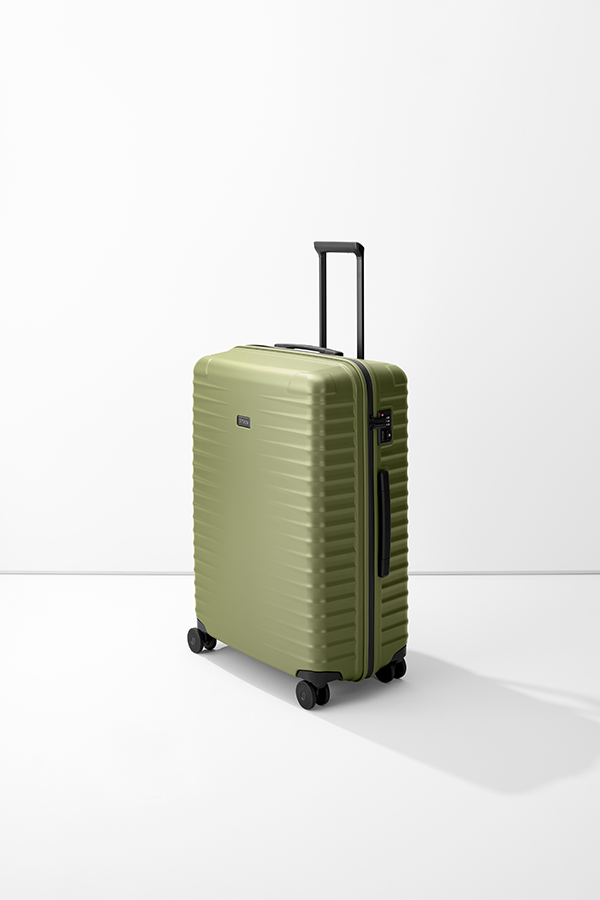
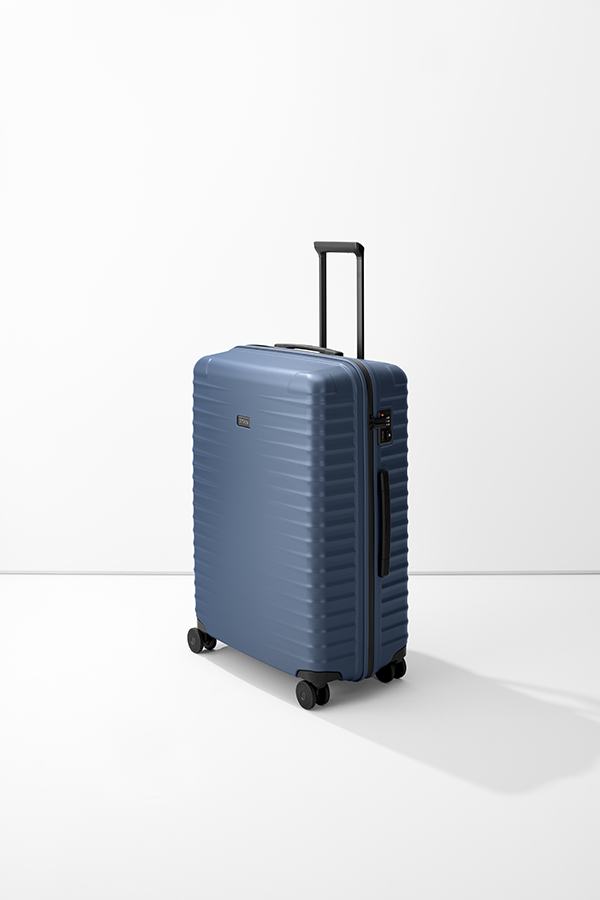
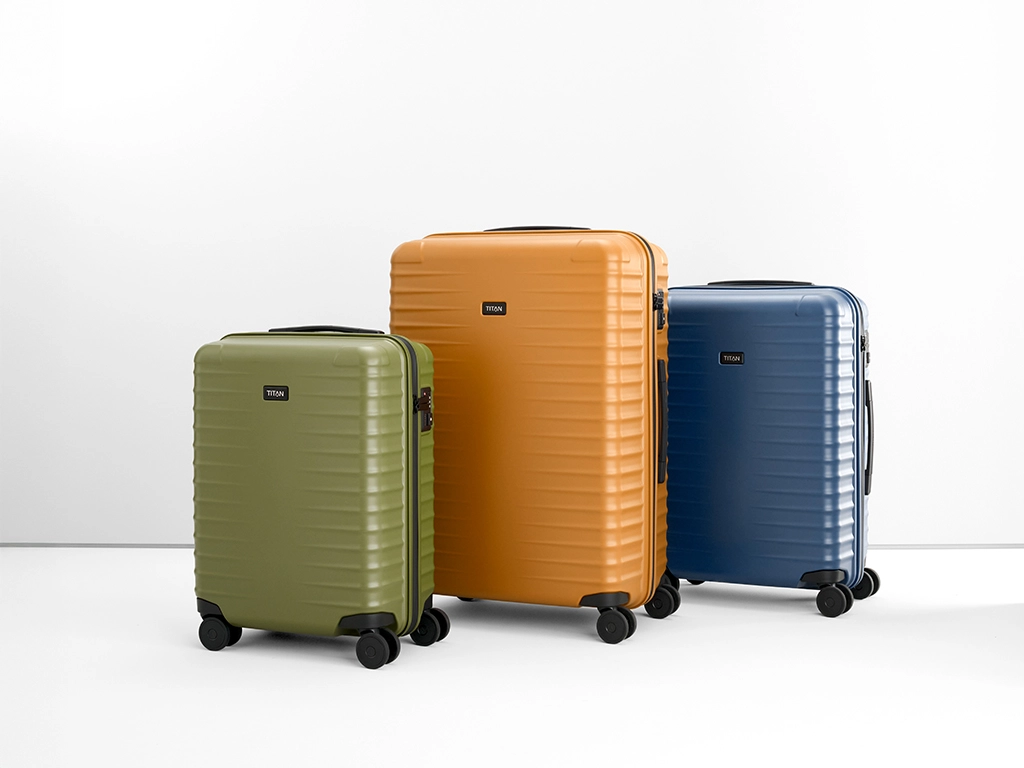
Three TITAN suitcases in orange, olive and blue are standing on a white surface. The suitcases have ribbed surfaces and black handles. The brand logo "TITAN" is discreetly displayed on each suitcase. The perspective is slightly elevated.

At security, hand luggage is screened using an X-ray or CT scanner. Traditional X-ray scanners produce two-dimensional images, whilst modern CT scanners display the contents in three dimensions and provide a much more precise view. As a result, fewer bags need to be opened, which noticeably speeds up the process and makes it more convenient for travellers.

CT scanners are already in use at major airports such as Munich, Frankfurt, Berlin and Hamburg. They often allow liquids and electronic devices to remain in your luggage. However, this technology is not yet available across the board. At airports with a mix of equipment, whether the new rules apply depends on the specific security lane.

Travellers should therefore always pay attention to the signage and instructions given by security staff. This makes it easy to adapt to the equipment on hand and ensures that the security check proceeds without unnecessary delays.

Staying organized keeps you calm: how to get through security without the rush

Effective preparation begins at home. If you know what is permitted at security and how the procedures work, you’ll travel much more relaxed. Small details determine whether the security process runs smoothly and calmly.

  • Liquids: At airports equipped with modern CT scanning technology, liquids may soon remain in carry-on baggage. However, this rule has not yet been implemented everywhere, so the standard liquids policy still applies. Liquids are only permitted in containers of up to 100 millilitres, packed in a transparent, resealable one-litre bag. If you keep this bag to hand, you can produce it quickly when required.
  • Electronic devices: The workflow for electronic devices also depends on the technology deployed. Where CT scanners are in use, laptops, tablets and cameras may remain in your carry-on bag. Where older scanners are still in use, these devices must be placed separately in a security tray. It is worth stowing these devices in an easily accessible place in your suitcase or rucksack so that you can retrieve them quickly when needed.
  • Clothing: Comfortable and practical clothing makes the security check easier. If possible, avoid belts, jewellery or accessories with metal parts. Shoes that are easy to put on and take off, as well as a jacket with practical pockets, provide extra comfort.

Checklist for security screening

A quick checklist helps to ensure you’ve thought of everything:

  • Boarding pass and ID
  • Liquid bags in accordance with the 100 ml rule
  • Laptop or tablet
  • Jacket, belt and metal objects
  • Hand luggage with a clear structure

If you pack your luggage carefully and are familiar with the applicable rules, you’ll travel with greater peace of mind and reach the gate without any stress. Even if not all security lanes are equipped with CT scanners, this preparation ensures that the process remains orderly and efficient.

Clarity on luggage: what belongs in your hand luggage

Cabin baggage is the focus of every security check. The key factor is which items are permitted. Sharp or pointed objects, tools and larger containers of liquids must always be placed in checked-in luggage. Power banks, rechargeable batteries and sensitive electronic devices should remain in your hand luggage.

With the introduction of CT scanners, at many airports you no longer need to remove liquids and electronic devices. This makes the process significantly quicker and more pleasant. Nevertheless, keeping your belongings organised remains important. Transparent bags, clearly organised compartments and sturdy materials ensure everything is easy to see.

Permitted in carry-on Not permitted in hand luggage
  • Liquids up to 100 ml in a 1-litre bag
  • Laptop, tablet, camera, power bank
  • Solid cosmetic products and liquids up to 100 ml
  • Medicines in their original packaging
  • Snacks and solid food
  • Disposable razor with protective cap
  • Liquids over 100 ml
  • Devices with faulty or loose batteries
  • Sprays or perfume bottles larger than 100 ml
  • Liquid medicines over 100 ml without proof
  • Liquid foods such as yoghurt or soup
  • Knives, scissors, tools

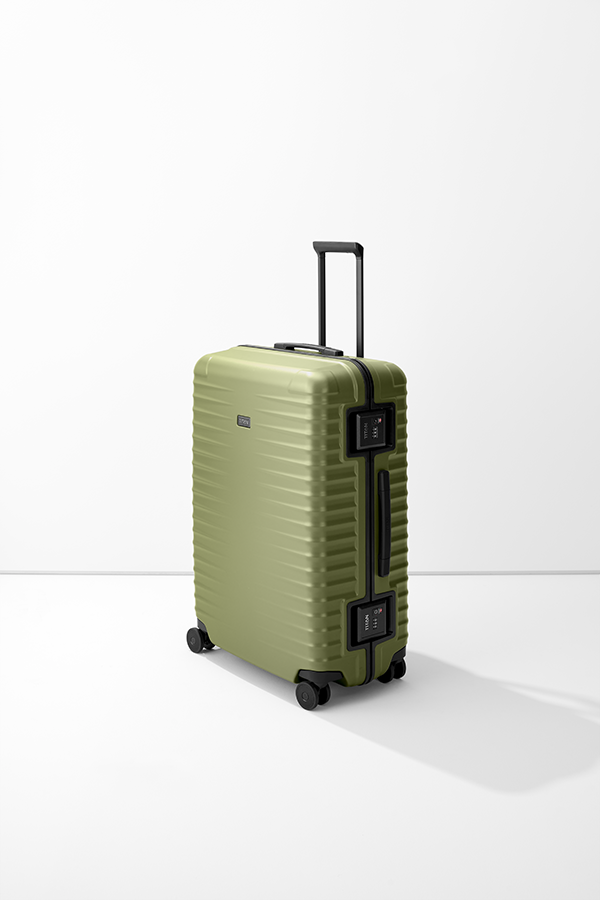
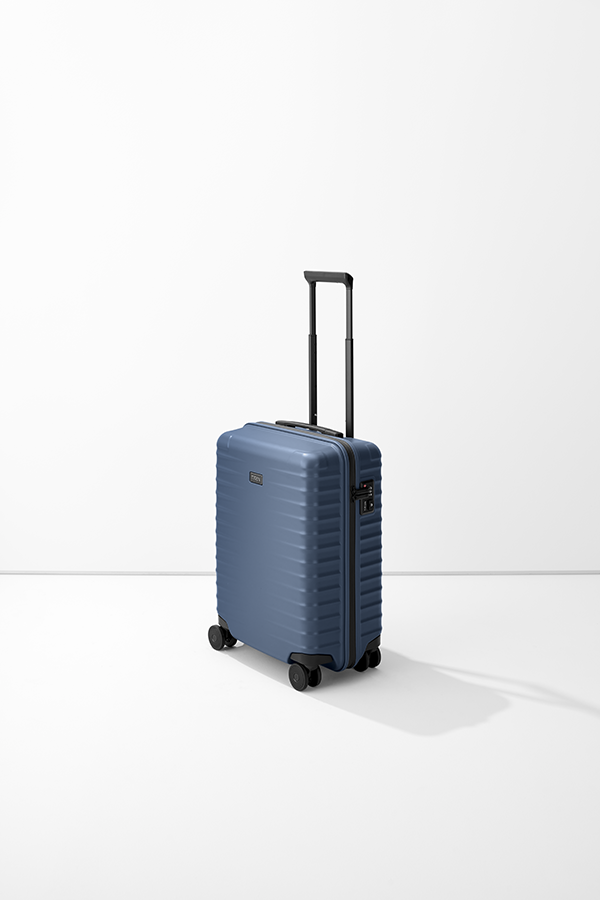
Well-organized hand luggage ensures that all your essentials are safely stowed away and easily accessible. TITAN Cabin suitcases are designed to be easy to handle, even at modern security checkpoints. With precise internal compartments, smooth-rolling wheels and integrated TSA locks, they combine comfort and security – perfect for travellers who value organisation and style.

A black wheeled suitcase by TITAN stands on a wooden floor in front of a wall of vertical wooden panels. Sunlight falls diagonally onto the wall, creating a pattern of light and dark. The suitcase has two extended black telescopic handles.

Routine with style: efficient travel for frequent flyers

Experienced travellers know that composure comes from being organised. If you know the procedures and are well prepared, you’ll reach the gate confidently and without any rush. Being well organised ensures that even very busy airports lose their stress.

  • Arriving early: Make sure you allow plenty of time. For flights within Europe, two hours before departure is a good rule of thumb; for long-haul flights, three hours is better. This gives you enough time for check-in, baggage drop-off and security checks without feeling rushed.
  • Priority access: Many airports offer separate lanes for frequent flyers or business passengers. These so-called priority or fast-lane access points significantly reduce waiting times and make the process much more convenient.
  • Preparation before check-in: At security checkpoints using standard X-ray technology, liquids and electronic devices should still be easily accessible. Packing your luggage accordingly saves time and ensures the process runs smoothly and in an orderly manner.

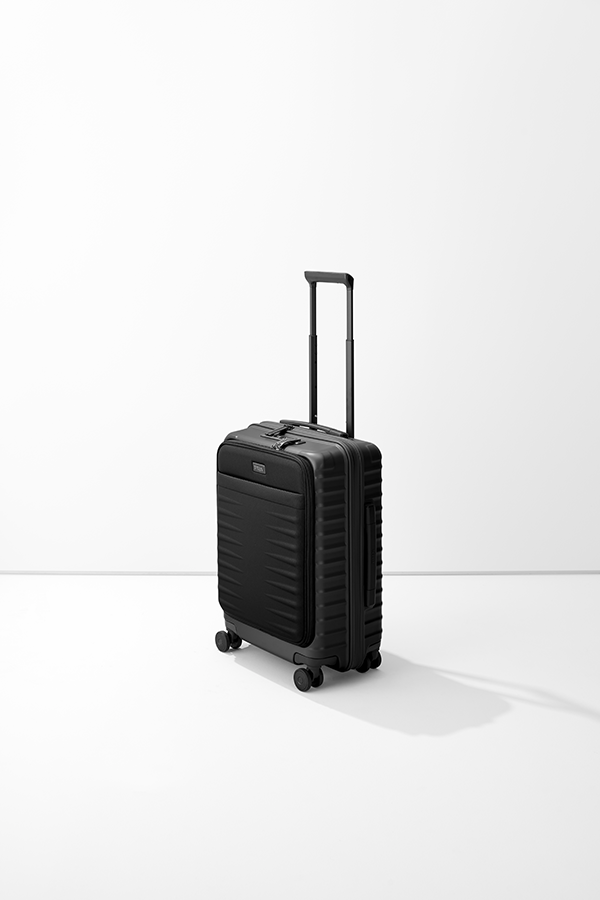
Anyone who travels regularly knows that organisation starts with choosing the right luggage. A business trolley from TITAN with an integrated front pocket enables quick access to your laptop, documents, and travel documents – without having to open your entire carry-on. This well-designed solution is ideal for frequent flyers who value precision and comfort.

This turns every day at the airport into a well-organised routine that instils a sense of calm and confidence – even when the terminals are busy.

Three hard-shell suitcases in olive green, white and black are standing next to one another. Each suitcase has a retractable handle and a combination lock. The suitcases have a ribbed surface and wheels. The background is a dark green.

From security screening to your destination: travel with clarity and quality

Airport security checks are an integral part of every journey – and with the right preparation, they become a moment of calm rather than a hectic ordeal. If you’re familiar with the procedures, pack in an organised manner and choose high-quality materials, you’ll find the screening process is part of a smooth and confident travel experience. Modern CT scanners make many steps easier and quicker these days, but true ease comes from organisation and clarity.

TITAN embodies the same commitment to precision and comfort that also characterises the new security technology. Whether aluminium or hard-shell, every model combines durability, functionality and timeless design. So every journey begins with a sense of structure – and ends with the feeling of travelling in style and with peace of mind.

Travelling is about trust, quality and consistency. That is exactly what TITAN.

Frequently asked questions about security checks

The security check follows a clear procedure that is structured similarly everywhere. Travellers place their hand luggage in the designated trays and then pass through the security gate. Security staff check solely to ensure that all regulations are being followed. The security check is a structured, routine procedure supported by modern technology and usually takes only a few minutes.
The duration depends on the time of day, the airport and the technology used. Modern CT scanners significantly speed up the process, as fewer items of luggage need to be opened. The security check usually takes between five and twenty minutes. However, it may take slightly longer during holiday periods or when passenger numbers are high. If you arrive at the airport in good time, you’ll stay relaxed and avoid feeling rushed.
At airports equipped with CT scanners, laptops and tablets can stay in your carry-on luggage, as these devices can be scanned in detail. Where traditional X-ray technology is still in use, electronic devices must continue to be screened separately. It is therefore advisable to stow these items in the top compartment of your carry-on bag, where they are easily accessible.
In terminals equipped with CT technology, liquids may remain in carry-on baggage as the scanners can clearly identify their contents. At security checkpoints without these devices, the familiar rule still applies: a maximum of 100 millilitres per container in a transparent, resealable one-litre bag. Travellers should always observe this rule, as not all checkpoints are equipped with CT scanners.
If an item cannot be clearly identified on the scanner image, the luggage is checked manually. Security staff open the suitcase or bag together with the traveller and inspect the contents. These follow-up checks usually take only a few minutes and are purely routine.
The security check is generally the same. However, on international flights, there are often additional passport or document checks, particularly on flights outside the Schengen Area. If you keep all your documents to hand, you will pass through these checks quickly and without delay.

Airport security checks: travel relaxed and confident

The security check at the airport is part of every flight and is a source of anxiety for many travellers. If you take a structured approach at this stage, you’ll travel with greater peace of mind. Long queues, sorting liquids or removing electronic devices needn’t be a source of stress. With the right preparation and a clear overview, the security check becomes a predictable part of your journey.

Modern technologies such as CT scanners accelerate many processes and ensure that security checks are now much more convenient. However, it is not just the technology that matters, but also how well you organise yourself. If you plan ahead, pack your hand luggage in a clear and organised manner and opt for high-quality materials, you will be able to navigate even busy airports with calm and confidence.

Travelling begins with organisation and ends with style. Those who combine practicality, quality and confidence will also navigate airport security checks without any stress – and start their journey feeling relaxed.

Precise procedures for safe travel: how security checks work

Airport security checks are designed to protect passengers and crew. They separate the public area from the security area and ensure that no prohibited or dangerous items are taken on board the aircraft. In Germany, responsibility lies with the Federal Police, who frequently commission specialist security services to carry out these checks.

A clearly structured process, modern technology and trained staff ensure that every security check is carried out accurately, safely and efficiently.

The security screening process

The security check follows a standardized process that is consistent across all German airports. First, the boarding pass is checked, then hand luggage is screened, and finally the passenger is screened. Jackets, belts and metal objects are placed in the trays provided. Liquids and electronic devices are either presented separately – depending on the technology used – or may remain in your luggage.

If you do your research, organise your hand luggage clearly and follow the staff’s instructions, you’ll find the security check is a predictable step on your way to the gate. Staying calm, being organised and having a good-quality suitcase all help to ensure that this part of your journey is as pleasant as the flight itself.

Three TITAN suitcases in orange, olive and blue are standing on a white surface. The suitcases have ribbed surfaces and black handles. The brand logo "TITAN" is discreetly displayed on each suitcase. The perspective is slightly elevated.

At security, hand luggage is screened using an X-ray or CT scanner. Traditional X-ray scanners produce two-dimensional images, whilst modern CT scanners display the contents in three dimensions and provide a much more precise view. As a result, fewer bags need to be opened, which noticeably speeds up the process and makes it more convenient for travellers.

CT scanners are already in use at major airports such as Munich, Frankfurt, Berlin and Hamburg. They often allow liquids and electronic devices to remain in your luggage. However, this technology is not yet available across the board. At airports with a mix of equipment, whether the new rules apply depends on the specific security lane.

Travellers should therefore always pay attention to the signage and instructions given by security staff. This makes it easy to adapt to the equipment on hand and ensures that the security check proceeds without unnecessary delays.

Staying organized keeps you calm: how to get through security without the rush

Effective preparation begins at home. If you know what is permitted at security and how the procedures work, you’ll travel much more relaxed. Small details determine whether the security process runs smoothly and calmly.

  • Liquids: At airports equipped with modern CT scanning technology, liquids may soon remain in carry-on baggage. However, this rule has not yet been implemented everywhere, so the standard liquids policy still applies. Liquids are only permitted in containers of up to 100 millilitres, packed in a transparent, resealable one-litre bag. If you keep this bag to hand, you can produce it quickly when required.
  • Electronic devices: The workflow for electronic devices also depends on the technology deployed. Where CT scanners are in use, laptops, tablets and cameras may remain in your carry-on bag. Where older scanners are still in use, these devices must be placed separately in a security tray. It is worth stowing these devices in an easily accessible place in your suitcase or rucksack so that you can retrieve them quickly when needed.
  • Clothing: Comfortable and practical clothing makes the security check easier. If possible, avoid belts, jewellery or accessories with metal parts. Shoes that are easy to put on and take off, as well as a jacket with practical pockets, provide extra comfort.

Checklist for security screening

A quick checklist helps to ensure you’ve thought of everything:

  • Boarding pass and ID
  • Liquid bags in accordance with the 100 ml rule
  • Laptop or tablet
  • Jacket, belt and metal objects
  • Hand luggage with a clear structure

If you pack your luggage carefully and are familiar with the applicable rules, you’ll travel with greater peace of mind and reach the gate without any stress. Even if not all security lanes are equipped with CT scanners, this preparation ensures that the process remains orderly and efficient.

Clarity on luggage: what belongs in your hand luggage

Cabin baggage is the focus of every security check. The key factor is which items are permitted. Sharp or pointed objects, tools and larger containers of liquids must always be placed in checked-in luggage. Power banks, rechargeable batteries and sensitive electronic devices should remain in your hand luggage.

With the introduction of CT scanners, at many airports you no longer need to remove liquids and electronic devices. This makes the process significantly quicker and more pleasant. Nevertheless, keeping your belongings organised remains important. Transparent bags, clearly organised compartments and sturdy materials ensure everything is easy to see.

Permitted in carry-on Not permitted in hand luggage
  • Liquids up to 100 ml in a 1-litre bag
  • Laptop, tablet, camera, power bank
  • Solid cosmetic products and liquids up to 100 ml
  • Medicines in their original packaging
  • Snacks and solid food
  • Disposable razor with protective cap
  • Liquids over 100 ml
  • Devices with faulty or loose batteries
  • Sprays or perfume bottles larger than 100 ml
  • Liquid medicines over 100 ml without proof
  • Liquid foods such as yoghurt or soup
  • Knives, scissors, tools

Well-organized hand luggage ensures that all your essentials are safely stowed away and easily accessible. TITAN Cabin suitcases are designed to be easy to handle, even at modern security checkpoints. With precise internal compartments, smooth-rolling wheels and integrated TSA locks, they combine comfort and security – perfect for travellers who value organisation and style.

A black wheeled suitcase by TITAN stands on a wooden floor in front of a wall of vertical wooden panels. Sunlight falls diagonally onto the wall, creating a pattern of light and dark. The suitcase has two extended black telescopic handles.

Routine with style: efficient travel for frequent flyers

Experienced travellers know that composure comes from being organised. If you know the procedures and are well prepared, you’ll reach the gate confidently and without any rush. Being well organised ensures that even very busy airports lose their stress.

  • Arriving early: Make sure you allow plenty of time. For flights within Europe, two hours before departure is a good rule of thumb; for long-haul flights, three hours is better. This gives you enough time for check-in, baggage drop-off and security checks without feeling rushed.
  • Priority access: Many airports offer separate lanes for frequent flyers or business passengers. These so-called priority or fast-lane access points significantly reduce waiting times and make the process much more convenient.
  • Preparation before check-in: At security checkpoints using standard X-ray technology, liquids and electronic devices should still be easily accessible. Packing your luggage accordingly saves time and ensures the process runs smoothly and in an orderly manner.

Anyone who travels regularly knows that organisation starts with choosing the right luggage. A business trolley from TITAN with an integrated front pocket enables quick access to your laptop, documents, and travel documents – without having to open your entire carry-on. This well-designed solution is ideal for frequent flyers who value precision and comfort.

This turns every day at the airport into a well-organised routine that instils a sense of calm and confidence – even when the terminals are busy.

Three hard-shell suitcases in olive green, white and black are standing next to one another. Each suitcase has a retractable handle and a combination lock. The suitcases have a ribbed surface and wheels. The background is a dark green.

From security screening to your destination: travel with clarity and quality

Airport security checks are an integral part of every journey – and with the right preparation, they become a moment of calm rather than a hectic ordeal. If you’re familiar with the procedures, pack in an organised manner and choose high-quality materials, you’ll find the screening process is part of a smooth and confident travel experience. Modern CT scanners make many steps easier and quicker these days, but true ease comes from organisation and clarity.

TITAN embodies the same commitment to precision and comfort that also characterises the new security technology. Whether aluminium or hard-shell, every model combines durability, functionality and timeless design. So every journey begins with a sense of structure – and ends with the feeling of travelling in style and with peace of mind.

Travelling is about trust, quality and consistency. That is exactly what TITAN.

Frequently asked questions about security checks

The security check follows a clear procedure that is structured similarly everywhere. Travellers place their hand luggage in the designated trays and then pass through the security gate. Security staff check solely to ensure that all regulations are being followed. The security check is a structured, routine procedure supported by modern technology and usually takes only a few minutes.
The duration depends on the time of day, the airport and the technology used. Modern CT scanners significantly speed up the process, as fewer items of luggage need to be opened. The security check usually takes between five and twenty minutes. However, it may take slightly longer during holiday periods or when passenger numbers are high. If you arrive at the airport in good time, you’ll stay relaxed and avoid feeling rushed.
At airports equipped with CT scanners, laptops and tablets can stay in your carry-on luggage, as these devices can be scanned in detail. Where traditional X-ray technology is still in use, electronic devices must continue to be screened separately. It is therefore advisable to stow these items in the top compartment of your carry-on bag, where they are easily accessible.
In terminals equipped with CT technology, liquids may remain in carry-on baggage as the scanners can clearly identify their contents. At security checkpoints without these devices, the familiar rule still applies: a maximum of 100 millilitres per container in a transparent, resealable one-litre bag. Travellers should always observe this rule, as not all checkpoints are equipped with CT scanners.
If an item cannot be clearly identified on the scanner image, the luggage is checked manually. Security staff open the suitcase or bag together with the traveller and inspect the contents. These follow-up checks usually take only a few minutes and are purely routine.
The security check is generally the same. However, on international flights, there are often additional passport or document checks, particularly on flights outside the Schengen Area. If you keep all your documents to hand, you will pass through these checks quickly and without delay.

Discover our products

Discover our products