10-YEAR WARRANTY ON ALL ‘MADE IN GERMANY’ PRODUCTS

An overview of suitcase materials: Which material suits your needs?

Choosing the right suitcase material has a direct impact on functionality, durability and design. Whether it’s a weekend break, a round-the-world trip or a business trip: the material of your suitcase has a significant influence on its weight, protection and durability.

Suitcase materials – a comparison

Choosing the right suitcase material depends primarily on your individual needs. Polycarbonate (PC) and CURV offer the highest levels of robustness and scratch resistance, making them ideal for frequent travellers, whilst polypropylene (PP) and ABS offer more affordable alternatives, albeit with lower durability and scratch resistance.

Aluminium impresses with its exceptional durability and structural stability, making it the choice for frequent travellers who prioritise longevity above all else. The slightly higher weight and price compared to polycarbonate or ABS are more than offset by its exceptionally long service life.

Nylon and polyester (PES) are used in soft-sided luggage and offer an affordable, flexible solution, albeit with less protection against external factors. TITAN uses only hard-shell suitcases made from polycarbonate or aluminium across all its models.

Criteria PC CURV ALU PP Nylon ABS PES
Weight 5/5 5/5 2/5 4/5 5/5 3/5 4/5
Flexibility 5/5 5/5 1/5 3/5 4/5 3/5 3/5
Robust 5/5 5/5 5/5 4/5 3/5 3/5 2/5
Temperature-resistant 4/5 5/5 4/5 3/5 3/5 2/5 3/5
Scratch-resistant 4/5 4/5 5/5 3/5 2/5 2/5 2/5
Water-resistant 5/5 5/5 5/5 5/5 3/5 4/5 2/5
Durable 5/5 5/5 5/5 4/5 4/5 3/5 3/5
Price 3/5 1/5 2/5 4/5 4/5 3/5 5/5
Conclusion 4.50 4.38 3.63 3.75 3.50 2.88 3.00

The rating is a classification by TITAN and is based on typical material properties. The result is the average of the eight criteria.

Summary of materials

  • CURV & polycarbonate (PC): Both materials are top of the range, offering excellent durability, flexibility and lightness. Polycarbonate also scores highly due to its wider availability and versatility.
  • Aluminium: Stylish, extremely durable and offering a high level of protection for the contents. The slightly higher weight is the price you pay for a material that gains character over the years. Ideal for frequent travellers who value protection and durability.
  • Polypropylene (PP): A sturdy material with good water resistance and an attractive price-performance ratio, but less flexible and tough than PC or CURV.
  • Nylon: particularly light and flexible, ideal for soft-shell suitcases, but less impact- and scratch-resistant.
  • ABS: A more affordable hard-shell option offering acceptable stability, though it is less durable and less resistant to temperature extremes.
  • Polyester (PES): Commonly used in soft-sided luggage, it is inexpensive and lightweight, but not particularly robust or water-resistant.

Polycarbonate: the all-rounder among suitcase materials

Polycarbonate combines a low weight with a level of durability that is rare in plastics. The thermoplastic polymer absorbs impacts rather than shattering, and returns to its original shape after being subjected to stress. For travellers who are frequently on the move, this is precisely what makes all the difference.

Advantages of polycarbonate suitcases

  • Lightweight: Thanks to its low weight, your luggage remains comfortable to carry even under demanding conditions.
  • Durability: Polycarbonate is impact-resistant and can withstand heavy loads, making it ideal for frequent flyers.
  • Weather resistance: UV radiation, rain and temperature fluctuations do not affect the material.
  • Flexibility: When under pressure, the material gives slightly without becoming permanently deformed – providing additional protection against cracks and breaks.
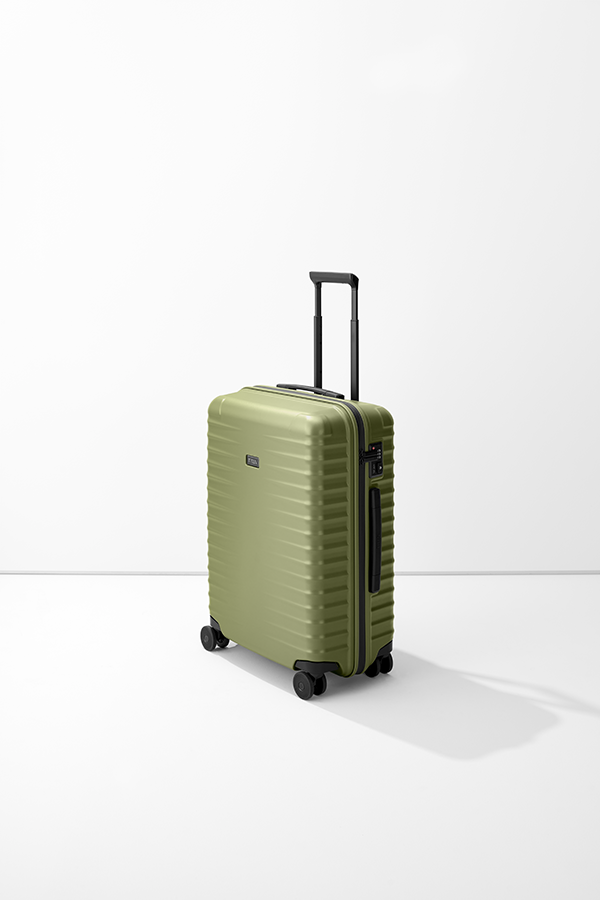
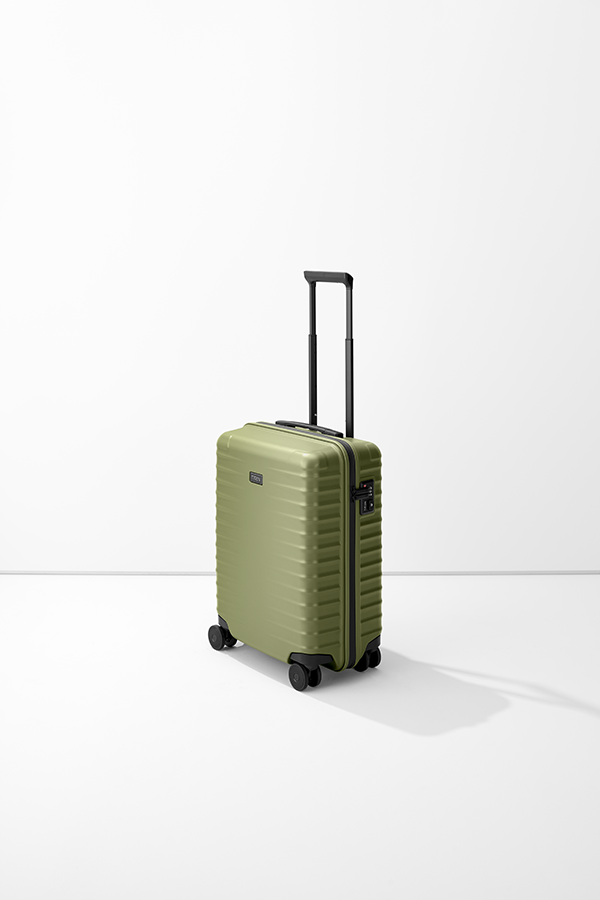
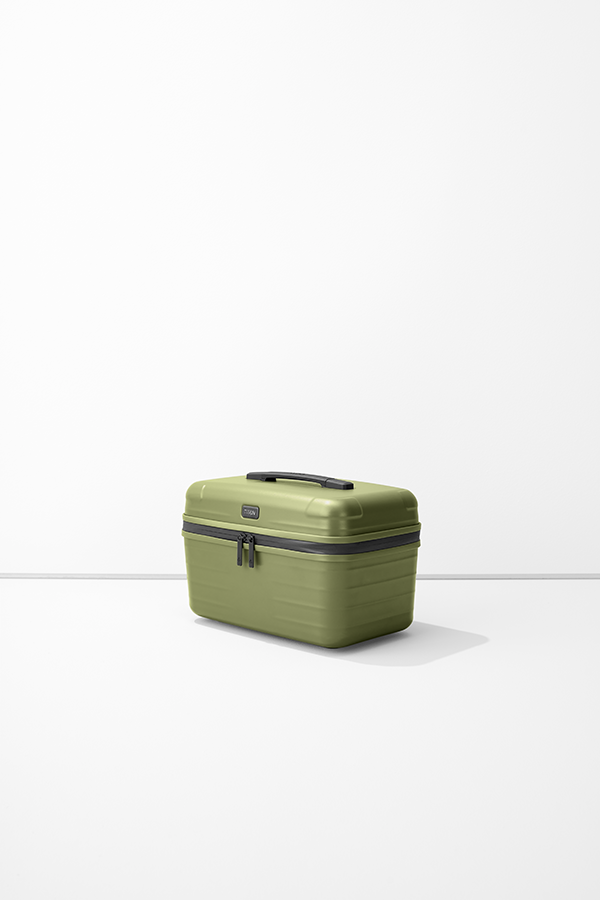
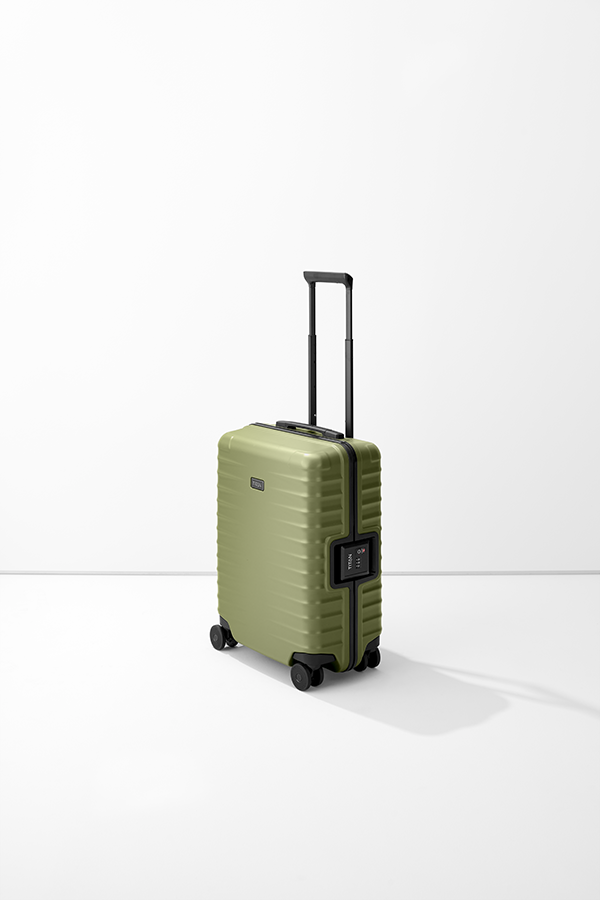
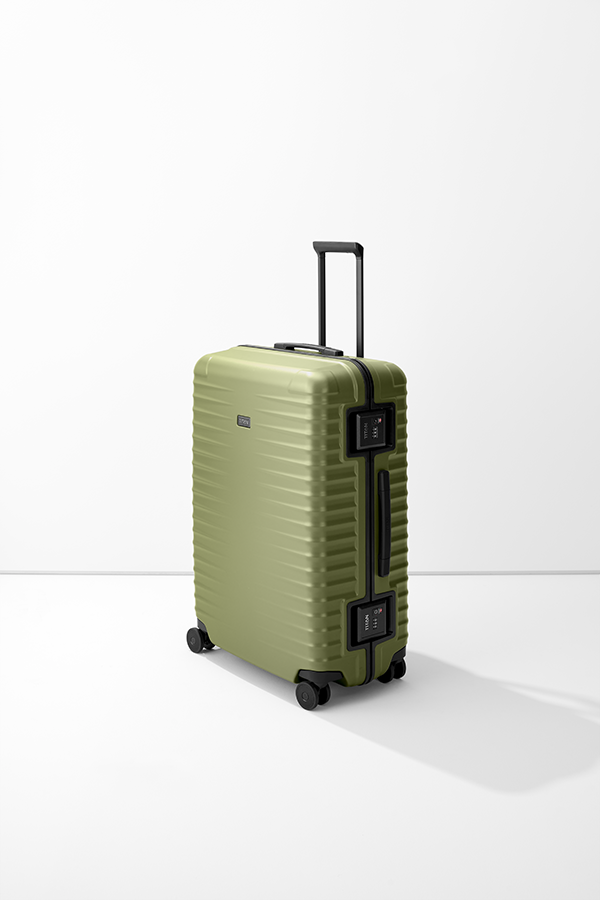
TITAN Polycarbonate hard-shell suitcases in grape green

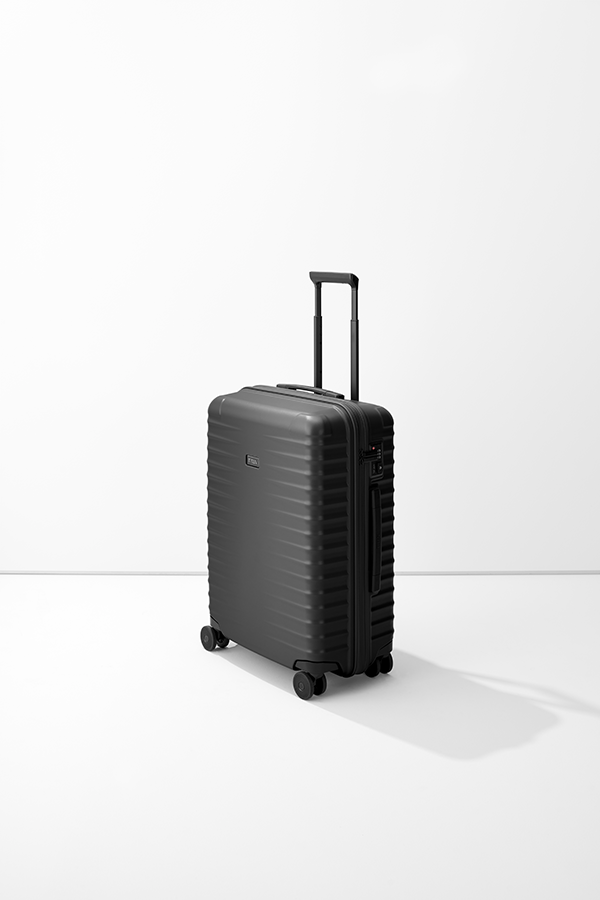
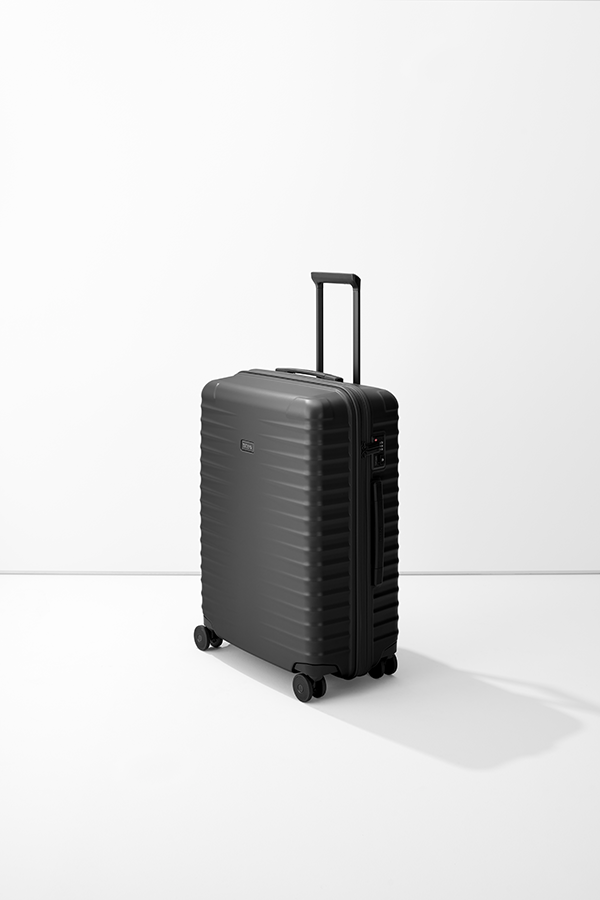
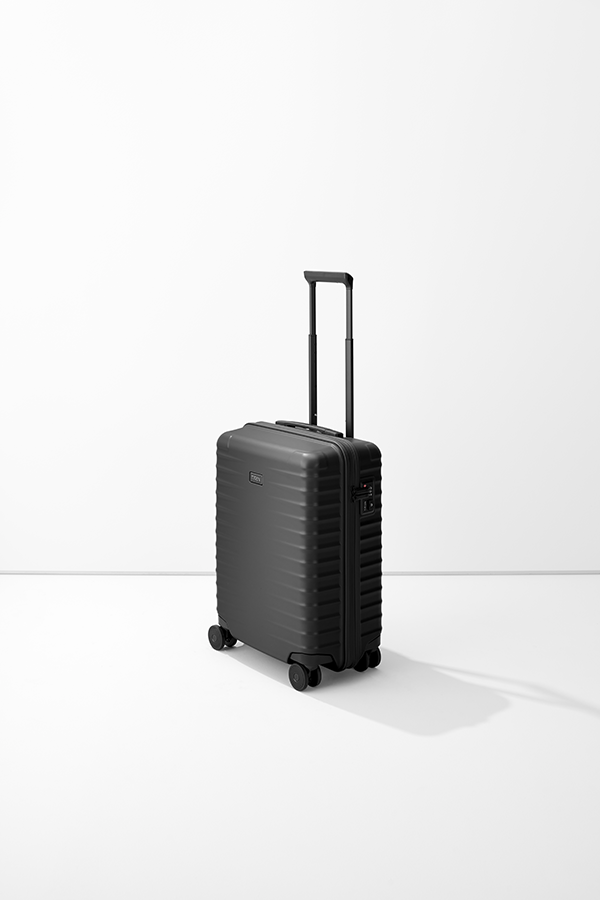
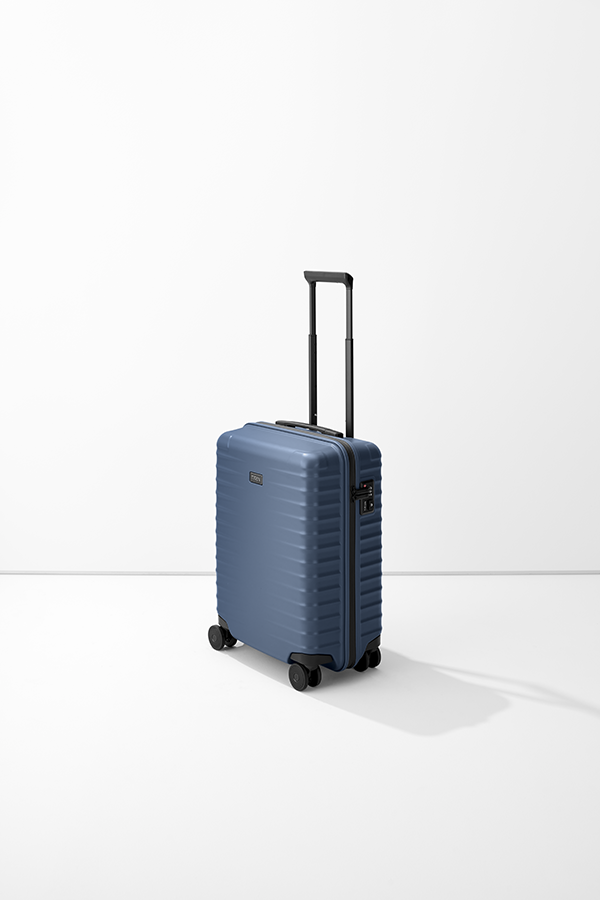
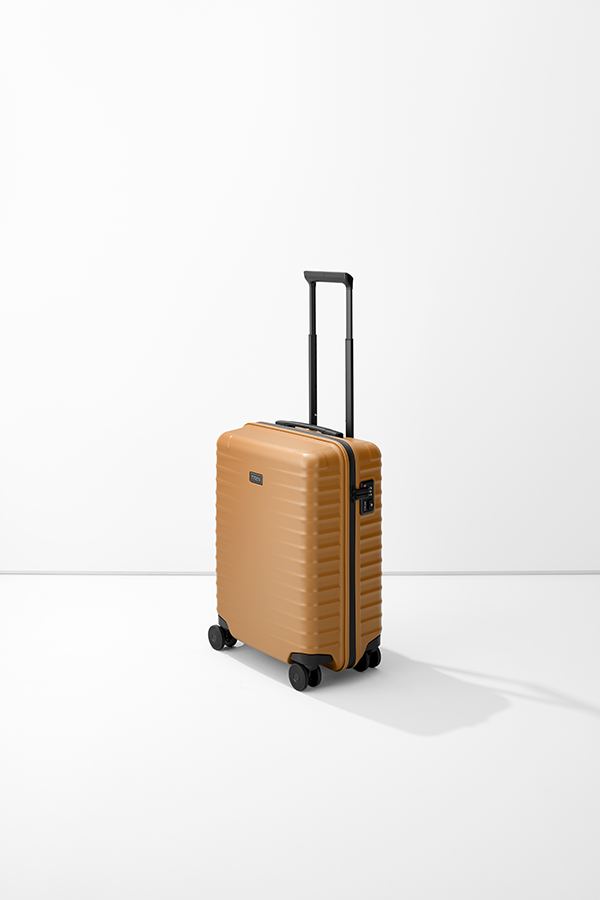
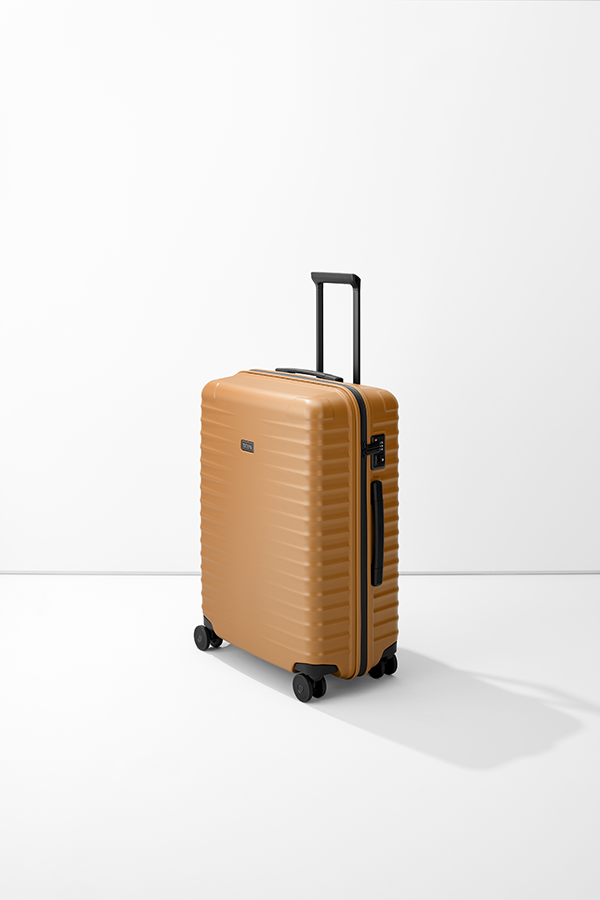
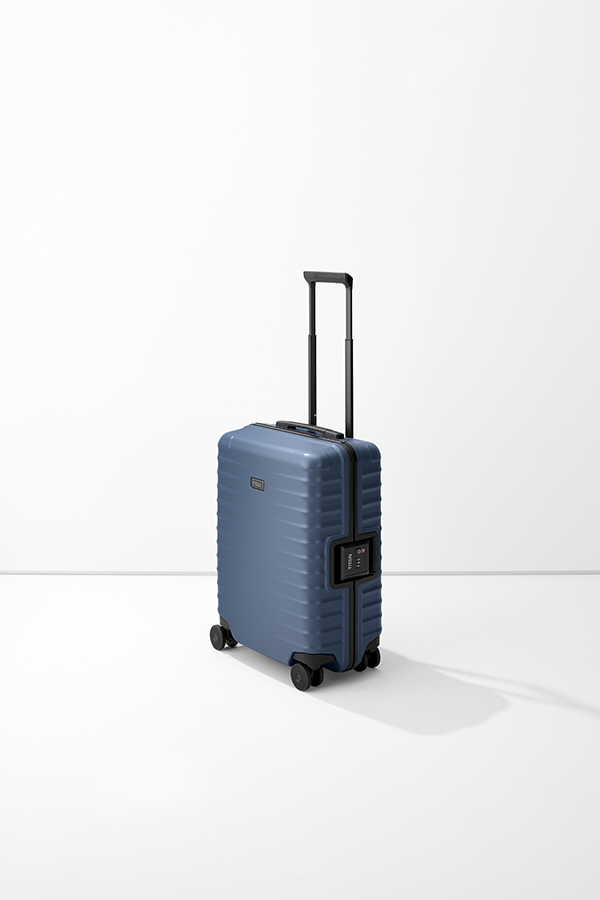
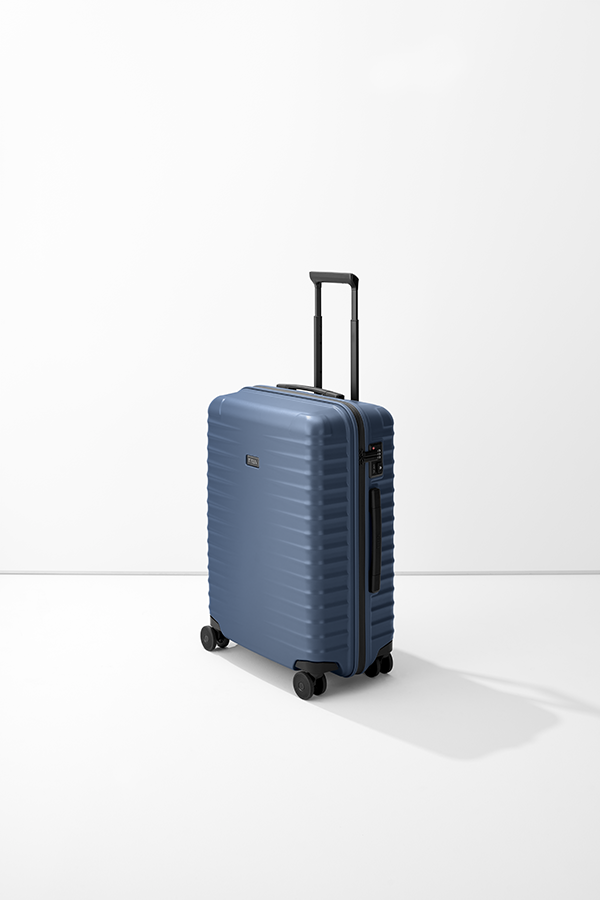
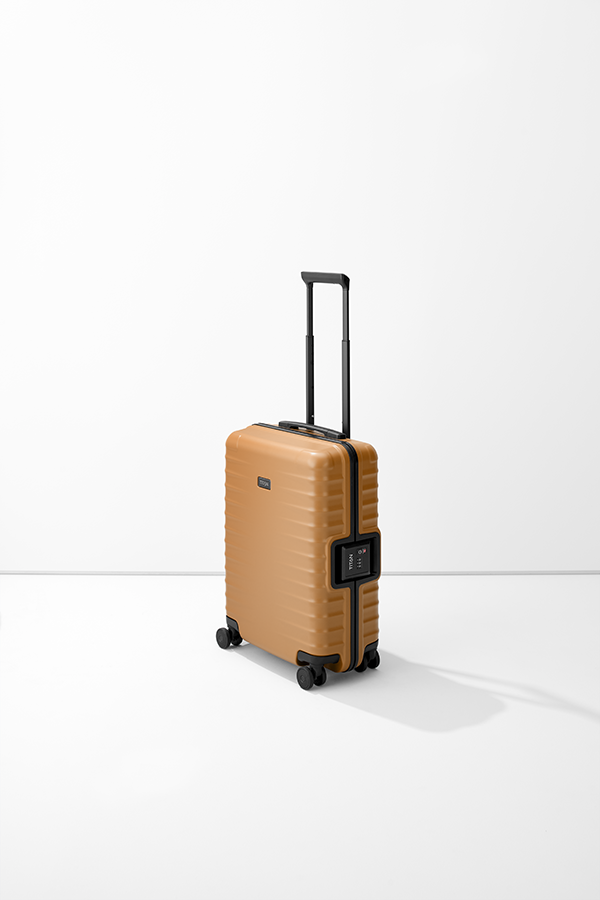
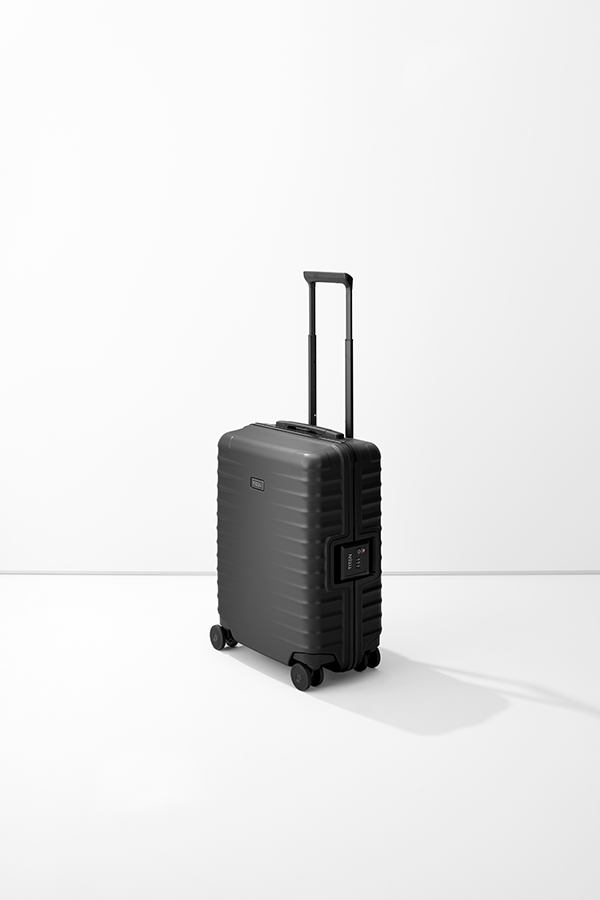
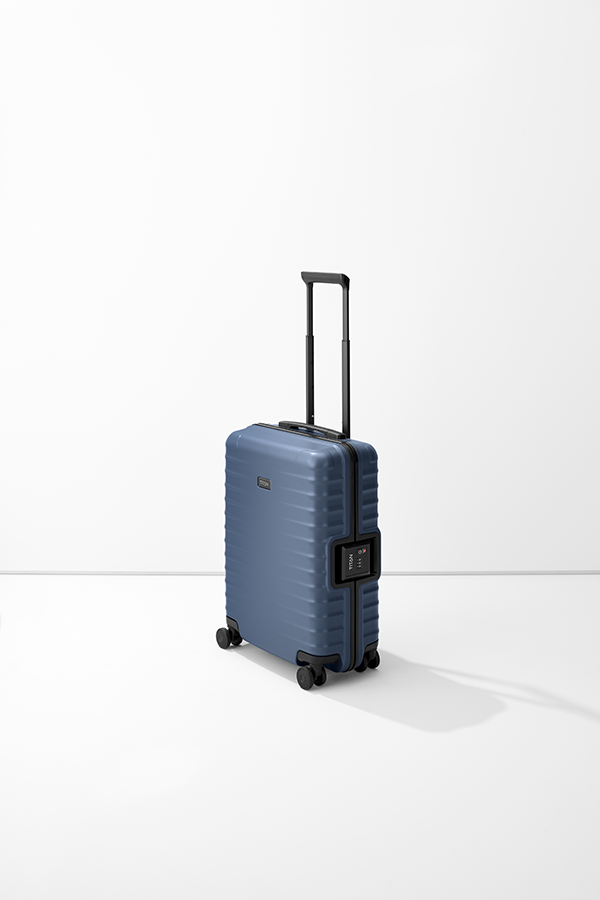
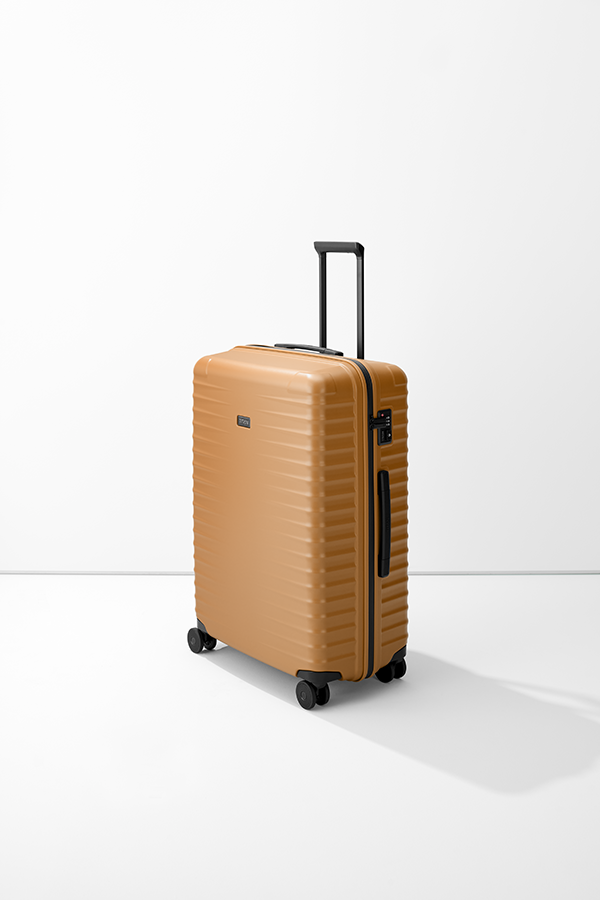
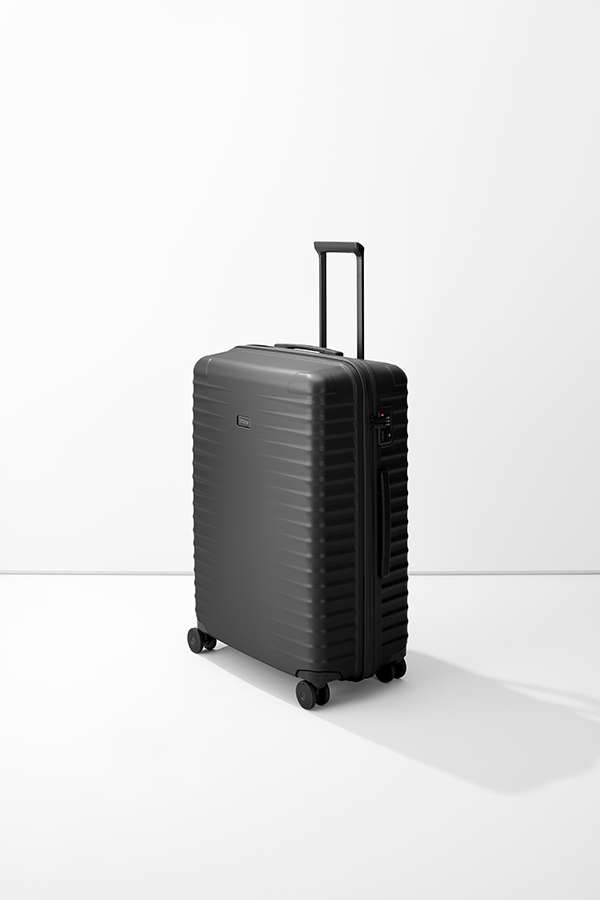
The polycarbonate hard-shell suitcases OVERSEAS and UPGRADE from TITAN translate these material properties into a contemporary design with well-thought-out features, available in various sizes and colours. Anyone looking for a lightweight, stylish piece of luggage for frequent travel will find the right choice here.

Aluminium: The material for discerning travellers

Aluminium offers qualities distinct from those of traditional suitcase materials: it retains its shape even after years of intensive use and reliably protects the contents from physical impact. Unlike plastic, aluminium changes visibly with every journey; small signs of wear are part and parcel of this and make every suitcase a personal companion.

What sets aluminium apart

  • Dimensional stability: The suitcase retains its shape, even with frequent use and heavy wear and tear.
  • Protection: The solid outer shell offers the suitcase’s contents a high level of protection against knocks and pressure.
  • Appearance: The metallic finish gives the suitcase a clean, distinctive look.
  • Durability: Aluminium lasts for many years and countless journeys without losing any of its integrity.

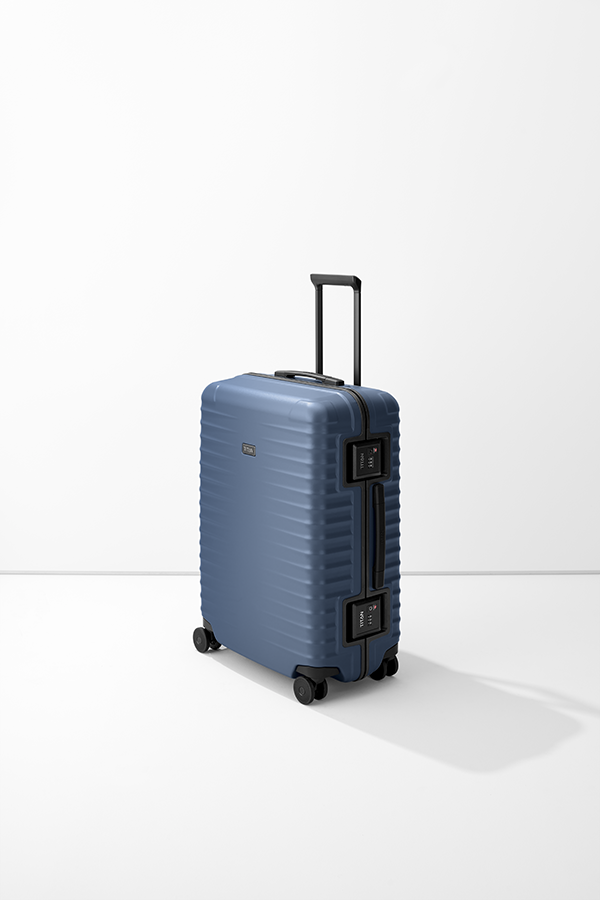
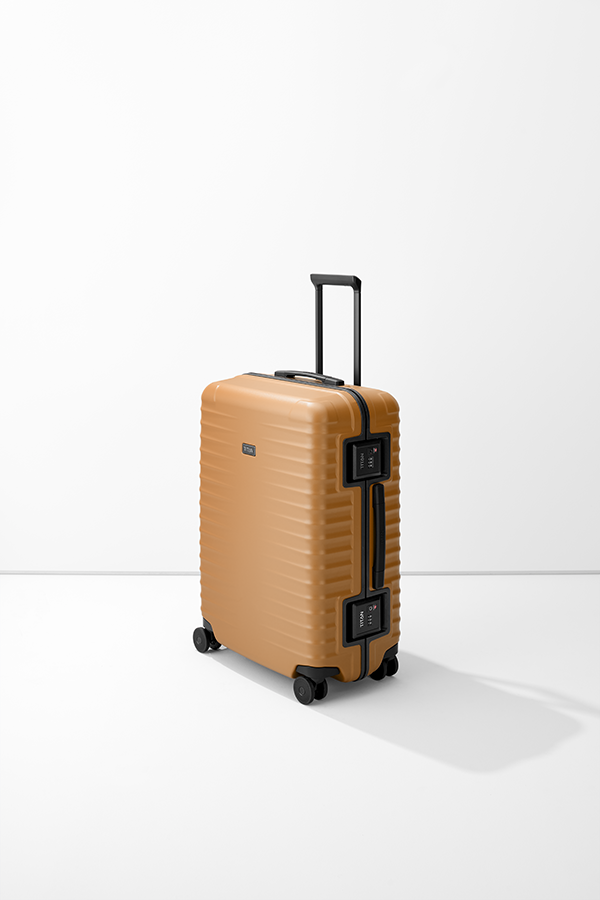
The aluminium suitcases from the ‘ ETERNITY ’ range at TITAN combine these material properties with clean, minimalist design and high-quality craftsmanship. If you’re looking for a piece of luggage that will last for years whilst developing its own character, aluminium is the right choice.

Polycarbonate hard-shell suitcases vs. aluminium suitcases – which is better?

The ‘ OVERSEAS ’ and ‘ UPGRADE ’ ranges are made from polycarbonate, ETERNITY aluminium, respectively. Which material suits you best depends less on whether it is ‘better’ or ‘worse’ and more on how you travel.

  • Weight: Polycarbonate is noticeably lighter, leaving more room for your luggage. Aluminium weighs slightly more, but this extra weight is in the material itself, which is what makes the suitcase so durable.
  • Impact behavior: Polycarbonate yields under stress and returns to its original shape, making it ideal for frequent flyers who change their luggage frequently. Aluminium reacts to impacts by developing small dents, which, over time, become part of the suitcase’s character rather than impairing its function.
  • Everyday aesthetics: Polycarbonate retains its smooth finish and is available in a range of colours, offering a contemporary look for every occasion. Aluminium impresses with its clean, metallic lines, which become more striking over the years.
  • Price range: Polycarbonate falls within the mid-price range, offering a good balance between protection and value for money. Aluminium is more expensive, but as a long-term investment, it will see you through many journeys.
  • Ideal for: Frequent flyers who value a lightweight, flexible piece of luggage will find the right choice in the polycarbonate ‘ OVERSEAS ’ or ‘ UPGRADE ’. Frequent travellers or those on business trips looking for a piece of luggage with maximum structural stability will make the right choice with the aluminium ‘ ETERNITY ’.

Key considerations when choosing a suitcase

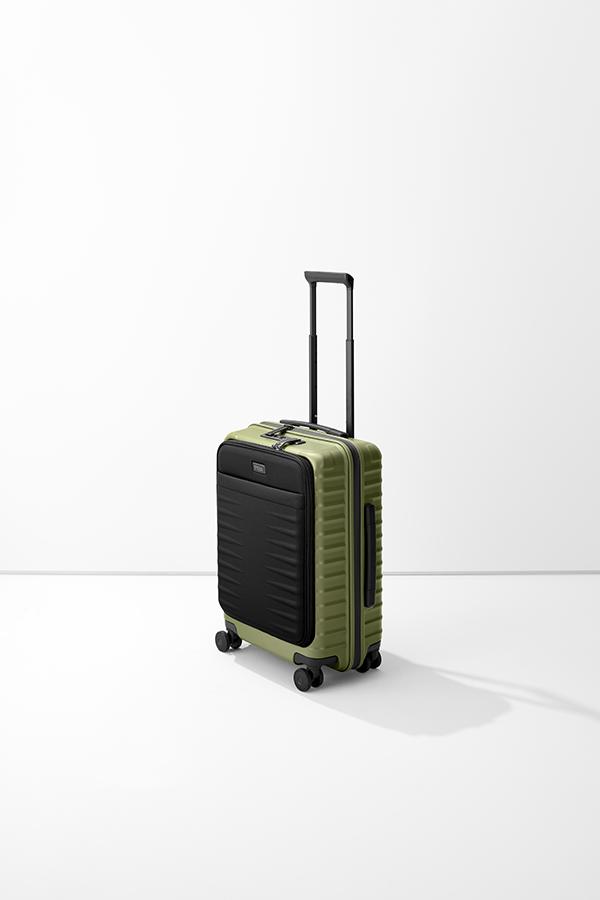
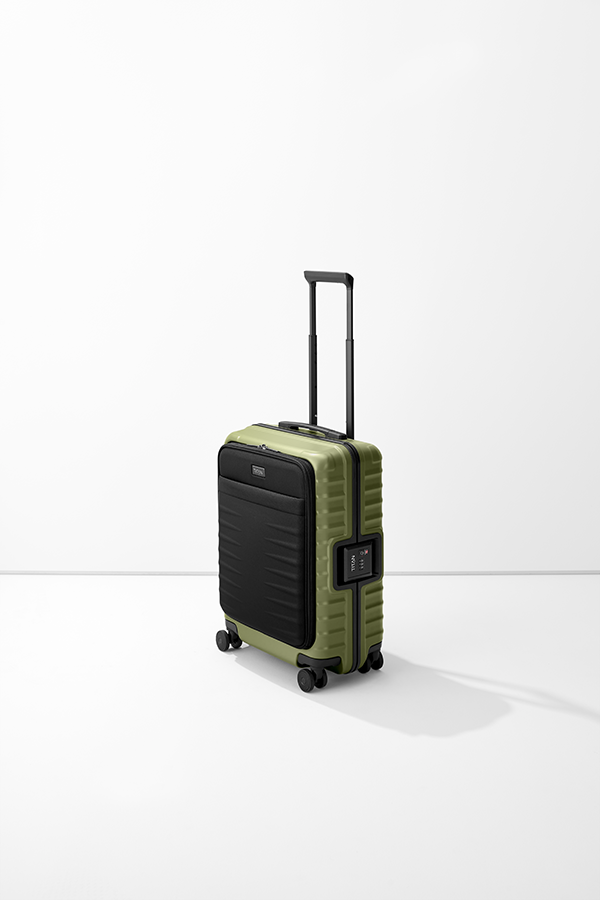
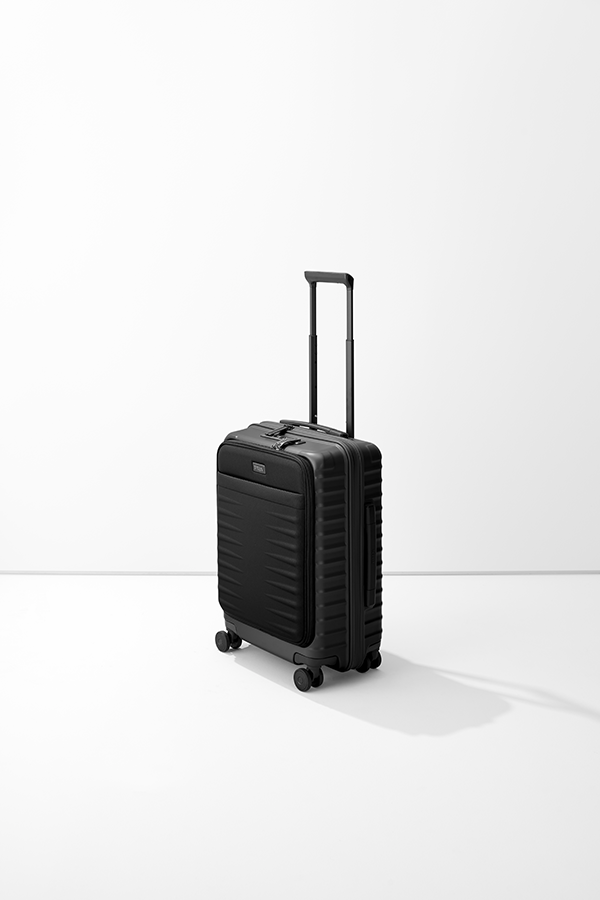
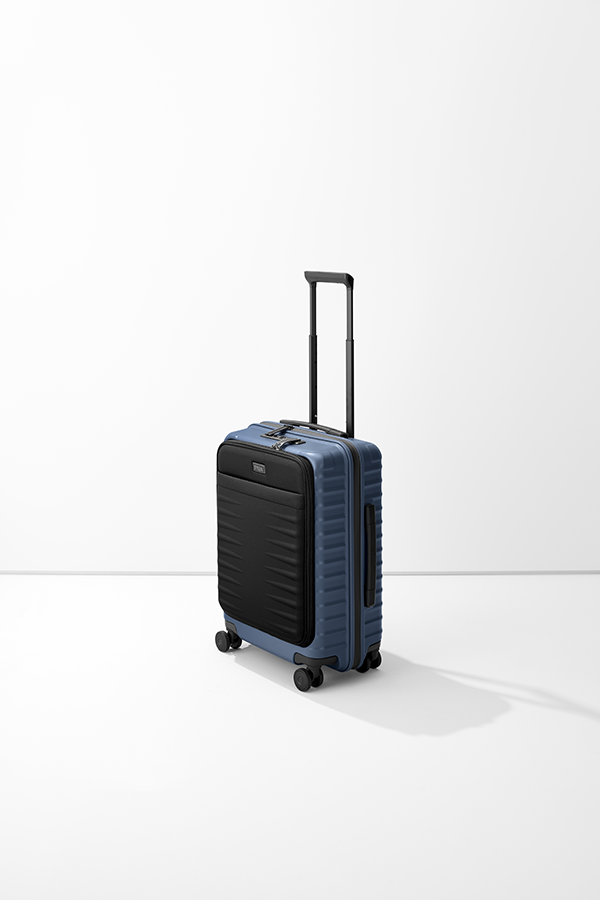
TITAN Hard-shell suitcases with a front pocket for a laptop and documents

Weight and handling: A lightweight suitcase isn’t just an advantage when checking in; it also makes transport easier. Polycarbonate scores highly here thanks to its low weight, without compromising on stability.

Security features: High-quality suitcases are equipped with modern security features such as TSA locks. These allow for secure inspection of luggage during international travel without damaging the suitcase.

Design and functionality: In addition to the choice of material, the internal features also play a role. Smart internal organisation, high-quality wheels and ergonomic carrying handles enhance comfort.

Here are some questions you can ask yourself to help choose the ideal suitcase for you:

  • Business trips or long holidays – how often do you travel?
  • How important is the weight of your suitcase to you?
  • What sort of protection does your suitcase need?
  • Budget or premium – how much are you prepared to spend?
  • Appearance and finish – how important is the aesthetics of your suitcase to you?
  • Durability – is long-term use particularly important?

Conclusion: Suitcase materials

The choice of suitcase material depends on your individual requirements. Polycarbonate impresses with its versatility and is an excellent choice for both private travel and everyday business use, whilst aluminium, with its structural stability and durability, is the ideal solution for frequent travellers who value a piece of luggage with character. TITAN relies on high-quality materials and innovative designs to create suitcases that make your travels easier, safer and more stylish.

Whether polycarbonate or aluminium: with OVERSEAS, UPGRADE and ETERNITY, TITAN the right material for every travel style.

Frequently asked questions about suitcase materials

Which material is best for suitcases?

It depends on your travel style. Polycarbonate impresses with its low weight and high flexibility, making it ideal for frequent flyers. Aluminium scores highly for its structural stability and durability, which lasts for many years. At TITAN, you’ll find both types of material available as hard-shell suitcases: OVERSEAS, UPGRADE and ETERNITY.

Which is better, ABS or polycarbonate suitcases?

Polycarbonate is more scratch-resistant, dimensionally stable and impact-resistant than ABS, and springs back to its original shape after being subjected to impact. ABS, on the other hand, offers a more affordable entry point into the world of hard-shell suitcases, but does not match the durability and resilience of polycarbonate.

Is nylon or polyester better suited for suitcases?

Both materials are also used in soft-shell suitcases. Nylon is lighter and more tear-resistant, while polyester offers a lower price point and good heat resistance. Both provide less protection against external factors than hard shells made of polycarbonate or aluminium.

Which suitcase is best suited for air travel?

For frequent air travel, a suitcase that is as light as possible is recommended, so that more of the permitted total weight is available for luggage. Polycarbonate suitcases such as OVERSEAS or UPGRADE are the obvious choice here. If you are also looking for maximum structural stability, an aluminium suitcase such as ETERNITY is also a good option.

An overview of suitcase materials: Which material suits your needs?

Choosing the right suitcase material has a direct impact on functionality, durability and design. Whether it’s a weekend break, a round-the-world trip or a business trip: the material of your suitcase has a significant influence on its weight, protection and durability.

Suitcase materials – a comparison

Choosing the right suitcase material depends primarily on your individual needs. Polycarbonate (PC) and CURV offer the highest levels of robustness and scratch resistance, making them ideal for frequent travellers, whilst polypropylene (PP) and ABS offer more affordable alternatives, albeit with lower durability and scratch resistance.

Aluminium impresses with its exceptional durability and structural stability, making it the choice for frequent travellers who prioritise longevity above all else. The slightly higher weight and price compared to polycarbonate or ABS are more than offset by its exceptionally long service life.

Nylon and polyester (PES) are used in soft-sided luggage and offer an affordable, flexible solution, albeit with less protection against external factors. TITAN uses only hard-shell suitcases made from polycarbonate or aluminium across all its models.

Criteria PC CURV ALU PP Nylon ABS PES
Weight 5/5 5/5 2/5 4/5 5/5 3/5 4/5
Flexibility 5/5 5/5 1/5 3/5 4/5 3/5 3/5
Robust 5/5 5/5 5/5 4/5 3/5 3/5 2/5
Temperature-resistant 4/5 5/5 4/5 3/5 3/5 2/5 3/5
Scratch-resistant 4/5 4/5 5/5 3/5 2/5 2/5 2/5
Water-resistant 5/5 5/5 5/5 5/5 3/5 4/5 2/5
Durable 5/5 5/5 5/5 4/5 4/5 3/5 3/5
Price 3/5 1/5 2/5 4/5 4/5 3/5 5/5
Conclusion 4.50 4.38 3.63 3.75 3.50 2.88 3.00

The rating is a classification by TITAN and is based on typical material properties. The result is the average of the eight criteria.

Summary of materials

  • CURV & polycarbonate (PC): Both materials are top of the range, offering excellent durability, flexibility and lightness. Polycarbonate also scores highly due to its wider availability and versatility.
  • Aluminium: Stylish, extremely durable and offering a high level of protection for the contents. The slightly higher weight is the price you pay for a material that gains character over the years. Ideal for frequent travellers who value protection and durability.
  • Polypropylene (PP): A sturdy material with good water resistance and an attractive price-performance ratio, but less flexible and tough than PC or CURV.
  • Nylon: particularly light and flexible, ideal for soft-shell suitcases, but less impact- and scratch-resistant.
  • ABS: A more affordable hard-shell option offering acceptable stability, though it is less durable and less resistant to temperature extremes.
  • Polyester (PES): Commonly used in soft-sided luggage, it is inexpensive and lightweight, but not particularly robust or water-resistant.

Polycarbonate: the all-rounder among suitcase materials

Polycarbonate combines a low weight with a level of durability that is rare in plastics. The thermoplastic polymer absorbs impacts rather than shattering, and returns to its original shape after being subjected to stress. For travellers who are frequently on the move, this is precisely what makes all the difference.

Advantages of polycarbonate suitcases

  • Lightweight: Thanks to its low weight, your luggage remains comfortable to carry even under demanding conditions.
  • Durability: Polycarbonate is impact-resistant and can withstand heavy loads, making it ideal for frequent flyers.
  • Weather resistance: UV radiation, rain and temperature fluctuations do not affect the material.
  • Flexibility: When under pressure, the material gives slightly without becoming permanently deformed – providing additional protection against cracks and breaks.
TITAN Polycarbonate hard-shell suitcases in grape green

The polycarbonate hard-shell suitcases OVERSEAS and UPGRADE from TITAN translate these material properties into a contemporary design with well-thought-out features, available in various sizes and colours. Anyone looking for a lightweight, stylish piece of luggage for frequent travel will find the right choice here.

Aluminium: The material for discerning travellers

Aluminium offers qualities distinct from those of traditional suitcase materials: it retains its shape even after years of intensive use and reliably protects the contents from physical impact. Unlike plastic, aluminium changes visibly with every journey; small signs of wear are part and parcel of this and make every suitcase a personal companion.

What sets aluminium apart

  • Dimensional stability: The suitcase retains its shape, even with frequent use and heavy wear and tear.
  • Protection: The solid outer shell offers the suitcase’s contents a high level of protection against knocks and pressure.
  • Appearance: The metallic finish gives the suitcase a clean, distinctive look.
  • Durability: Aluminium lasts for many years and countless journeys without losing any of its integrity.

The aluminium suitcases from the ‘ ETERNITY ’ range at TITAN combine these material properties with clean, minimalist design and high-quality craftsmanship. If you’re looking for a piece of luggage that will last for years whilst developing its own character, aluminium is the right choice.

Polycarbonate hard-shell suitcases vs. aluminium suitcases – which is better?

The ‘ OVERSEAS ’ and ‘ UPGRADE ’ ranges are made from polycarbonate, ETERNITY aluminium, respectively. Which material suits you best depends less on whether it is ‘better’ or ‘worse’ and more on how you travel.

  • Weight: Polycarbonate is noticeably lighter, leaving more room for your luggage. Aluminium weighs slightly more, but this extra weight is in the material itself, which is what makes the suitcase so durable.
  • Impact behavior: Polycarbonate yields under stress and returns to its original shape, making it ideal for frequent flyers who change their luggage frequently. Aluminium reacts to impacts by developing small dents, which, over time, become part of the suitcase’s character rather than impairing its function.
  • Everyday aesthetics: Polycarbonate retains its smooth finish and is available in a range of colours, offering a contemporary look for every occasion. Aluminium impresses with its clean, metallic lines, which become more striking over the years.
  • Price range: Polycarbonate falls within the mid-price range, offering a good balance between protection and value for money. Aluminium is more expensive, but as a long-term investment, it will see you through many journeys.
  • Ideal for: Frequent flyers who value a lightweight, flexible piece of luggage will find the right choice in the polycarbonate ‘ OVERSEAS ’ or ‘ UPGRADE ’. Frequent travellers or those on business trips looking for a piece of luggage with maximum structural stability will make the right choice with the aluminium ‘ ETERNITY ’.

Key considerations when choosing a suitcase

TITAN Hard-shell suitcases with a front pocket for a laptop and documents

Weight and handling: A lightweight suitcase isn’t just an advantage when checking in; it also makes transport easier. Polycarbonate scores highly here thanks to its low weight, without compromising on stability.

Security features: High-quality suitcases are equipped with modern security features such as TSA locks. These allow for secure inspection of luggage during international travel without damaging the suitcase.

Design and functionality: In addition to the choice of material, the internal features also play a role. Smart internal organisation, high-quality wheels and ergonomic carrying handles enhance comfort.

Here are some questions you can ask yourself to help choose the ideal suitcase for you:

  • Business trips or long holidays – how often do you travel?
  • How important is the weight of your suitcase to you?
  • What sort of protection does your suitcase need?
  • Budget or premium – how much are you prepared to spend?
  • Appearance and finish – how important is the aesthetics of your suitcase to you?
  • Durability – is long-term use particularly important?

Conclusion: Suitcase materials

The choice of suitcase material depends on your individual requirements. Polycarbonate impresses with its versatility and is an excellent choice for both private travel and everyday business use, whilst aluminium, with its structural stability and durability, is the ideal solution for frequent travellers who value a piece of luggage with character. TITAN relies on high-quality materials and innovative designs to create suitcases that make your travels easier, safer and more stylish.

Whether polycarbonate or aluminium: with OVERSEAS, UPGRADE and ETERNITY, TITAN the right material for every travel style.

Frequently asked questions about suitcase materials

Which material is best for suitcases?

It depends on your travel style. Polycarbonate impresses with its low weight and high flexibility, making it ideal for frequent flyers. Aluminium scores highly for its structural stability and durability, which lasts for many years. At TITAN, you’ll find both types of material available as hard-shell suitcases: OVERSEAS, UPGRADE and ETERNITY.

Which is better, ABS or polycarbonate suitcases?

Polycarbonate is more scratch-resistant, dimensionally stable and impact-resistant than ABS, and springs back to its original shape after being subjected to impact. ABS, on the other hand, offers a more affordable entry point into the world of hard-shell suitcases, but does not match the durability and resilience of polycarbonate.

Is nylon or polyester better suited for suitcases?

Both materials are also used in soft-shell suitcases. Nylon is lighter and more tear-resistant, while polyester offers a lower price point and good heat resistance. Both provide less protection against external factors than hard shells made of polycarbonate or aluminium.

Which suitcase is best suited for air travel?

For frequent air travel, a suitcase that is as light as possible is recommended, so that more of the permitted total weight is available for luggage. Polycarbonate suitcases such as OVERSEAS or UPGRADE are the obvious choice here. If you are also looking for maximum structural stability, an aluminium suitcase such as ETERNITY is also a good option.

Discover our products

Discover our products